
FACIAL FAT INJECTION
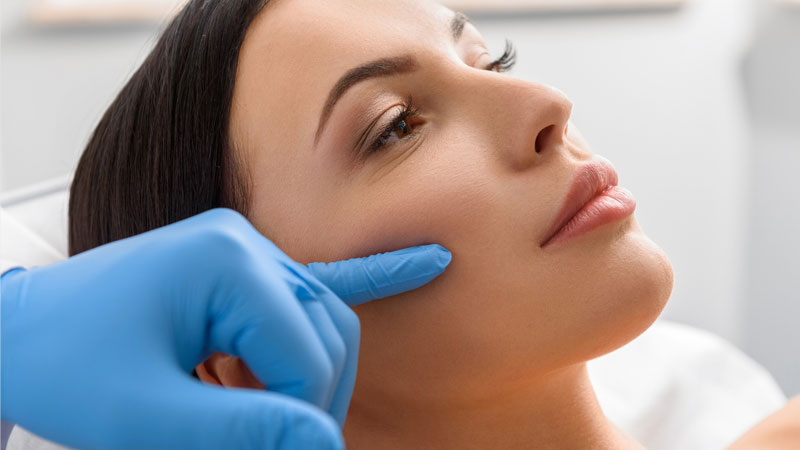
Facial fat injection is a natural aesthetic procedure that aims to restore volume loss and achieve a fuller, more youthful appearance by injecting purified fat tissue taken from the individual’s own body into the facial area. This method both softens facial contours and improves skin quality over time.
Treatment Process
1 - 2 hours
Same Day
1 - 3 days
2 - 4 weeks
What is Autogenous Fat Grafting?
Autogenous Fat Grafting is the process of injecting fat taken from a person’s own body, after undergoing a tightening and purification process, into another part of the body. The required fat can be easily harvested from the navel, waist, or between the legs. There are different approaches to harvesting and transforming the fat into a filler. Just like liposuction, the fat can be harvested using a wet/semi-wet method and centrifuged, or it can be harvested using a completely dry method and used directly. Depending on the application area, the fluidity of the fat can be adjusted by inserting it through cannulas of different diameters. This allows for procedures called microfat injection or nanofat injection.
What are the Advantages of Facial Fat Injections?
- Because the injected material is obtained from the person’s own body, there is no allergic reaction.
- Because the injected fat cells adhere to their target area and survive, they maintain their effects for many years.
- Fat tissue is extremely rich in growth factors and stem cells. It provides vitality and radiance to the skin in the applied area. These changes significantly increase patient satisfaction in the medium and long term.
- The fullness effect can be reduced with short massages, especially in the first 3-4 weeks after the procedure. Asymmetries can be corrected.
- It does not cause an abnormal sensation to the touch.
- Fat injections can be performed under local anesthesia and as an outpatient procedure. However, for sterilization and patient health reasons, it is recommended that the procedure be performed in an operating room.
Patient Reviews

In What Situations Are Facial Fat Injections Used?
- Fat injections are used to restore fullness in patients between the ages of 30 and 45, whose skin is beginning to thin and sag.
- They are used in combination with a thread lift for patients with significant facial sagging and volume loss who are unable to undergo surgical treatment.
- They are used to enhance the results of facelift and midface lift surgeries.
- They are used to fill the deep gaps between the eyebrows, forehead, and between the wing of the nose and the corner of the lips.
- They are used to enhance the lips, correct midface hollowness, eliminate facial asymmetries, and eliminate traumatic scars.
Is Facial Fat Injection Permanent?
Fat cells are extremely sensitive and vulnerable to oxygen deprivation and physical damage. Therefore, a certain portion of the fat injected into the treated area dies and is lost early.
When Does Edema Disappear After Fat Injection?
The early death of some fat cells causes a 30-45% volume loss. Therefore, during the initial procedure, a larger amount of fat tissue is injected than intended. Consequently, the face may appear more swollen than normal during the first 2-3 weeks of the procedure. Smoking significantly reduces the amount of fat that will adhere to the tissue. Therefore, smoking is not recommended before or after the procedure.
Fat Injection Prices
Facial fat injection can often becombined with other procedures. Therefore, the cost of the procedure varies depending on the patient’s needs.
Frequently asked questions
Part of the injected fat is absorbed by the body; the part that survives lasts a long time. Some people need a second session.
Because your own tissue is used, an allergic reaction is not expected. However, how much fat will survive cannot be known exactly in advance.
Usually from areas with enough fat, such as around the navel, the waist or the inner thighs.
Most people return to daily activities within 1-3 days. Swelling and bruising fade in the first weeks and the final look appears within a few weeks.
Irregularity, asymmetry and more absorption than expected can occur. Very rarely, serious vascular complications have been reported, so the procedure is best performed in operating-room conditions.


